
1800 - 1900
1800 - 1900
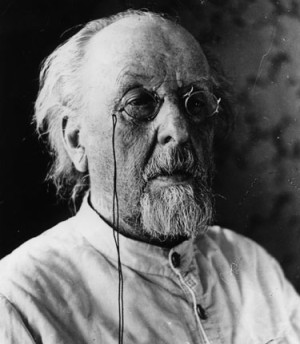
1857 - 1935: Konstantin E. Tsiolkovsky, Rocket Scientist (RU)
Konstantin E. Tsiolkovsky (1857-1935) "The Father of Rocketry." He educated himself by reading books in his home library, particularly those on science and mathematics. He discovered physics which led him to develop inventions, such as ideas for steam-driven and wind-propelled carriages, paper aerostats, and lathes.
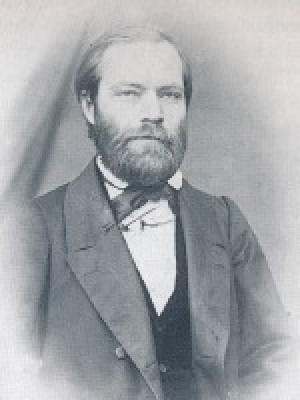
1858: First School for the Deaf in Finland, Porvoo
In 1846, Carl Oscar Malm (1826 - 1863) established a private school for the deaf in Porvoo. In the school, Malm gave instruction in the sign language he had learnt at the Manilla School in Sweden. His objective was that the student should learn both sign language and written language at the same time.
1860 - 1911: Heinrich Fick (DE)
Heinrich Fick was a deaf German painter, disability rights activist and mountaineer.
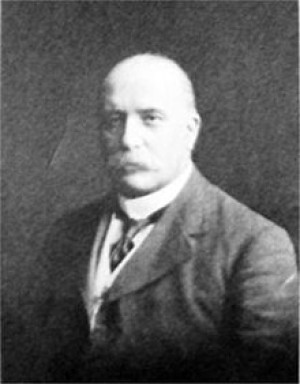
1861 - 1918: Francis Maginn (UK)
Francis Maginn (1861–1918) was a Church of Ireland missionary who worked to improve living standards for the deaf community by promoting sign language and was one of the co-founders of the British Deaf Association.
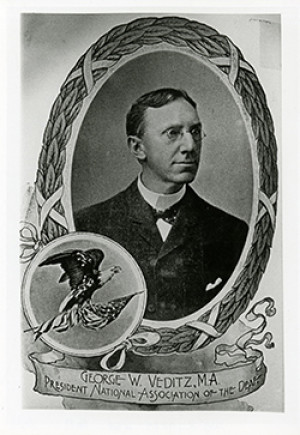
1861 - 1937: George W. Veditz, First Person to Film Sign Language (ASL)
In 1904, Veditz became president of the National Association of the Deaf (NAD). He had strong opinions about preserving sign language, so during his years as president he worked closely with Oscar Regensburg, the first chairman of NAD's Motion Picture Fund Committee to produce some of the earliest films that recorded sign language.
Consequently, these videos are some of the most significant documents in deaf history.
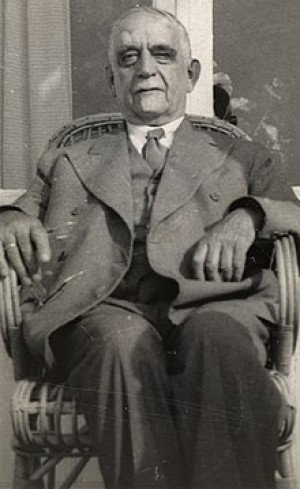
1862 - 1943: Conrad Svendsen (NO)
Conrad Svendsen (19 August 1862 – 9 September 1943) was a Norwegian teacher for the deaf, priest and magazine editor.
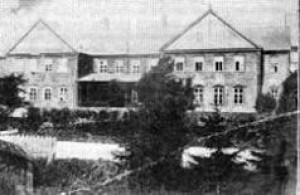
1866: First School for the Deaf in Vändra, Estonia
In 1866, under the leadership of Pastor Ernst Sokolovski, a school for the deaf was opened in Vändra. (Kotsar, Kotsar 1997, 9).
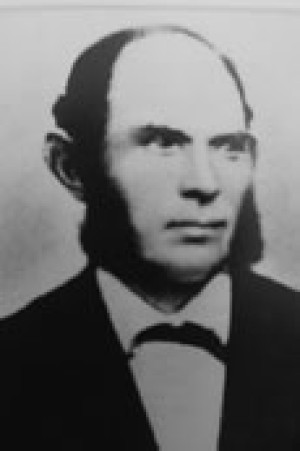
1867: First School for the Deaf in Iceland, Páll Pálsson
The first school for the deaf was founded on September 4th 1867 when Rev. Páll Pálsson was appointed the teacher of the deaf. He took „mute“ students into his home and taught them using finger-spelling and gestures.
Páll used the Danish manual alphabet because he had been educated in Denmark himself. It can be assumed that at this time Icelandic Sign language started to develop amongst the students.
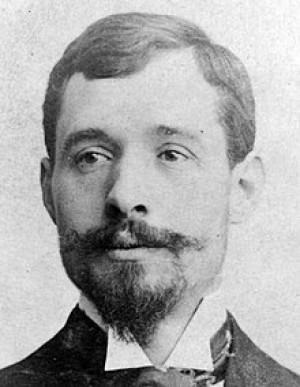
1869 - 1943: Fernand Hamar, Sculptor (FR)
Fernand Joseph Job Hamar, born 15 July 1869 in Vendôme and died 10 March 1943 in Paris, was a French sculptor.
During the Franco-Prussian war of 1870, between the Battle of Orleans (1870) and the Battle of Le Mans, the Prussian army pushed the Army of the Loire around Le Temple. The noise of the cannons caused the deafness of Fernand Hamar, according to his family. Around his tenth birthday, he entered the Institut National de Jeunes Sourds de Paris.

1870's: Deaf Victorians in the UK
Documentary (BSL with English subtitles) with dramatic inserts. Starring some well-known modern Deaf actors, Deaf Victorians shows us what life was like for Deaf people in Victorian times.
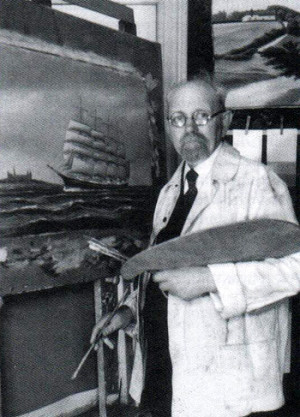
1870-1950: Peder Christian Pedersen, Painter (DK)
Peder Christian Pedersen was born on 12-10-1870 and died on 11-5-1950 in Aalborg. Ship paintings and other maritime environments were his specialty.