
1800 - 1900
1800 - 1900
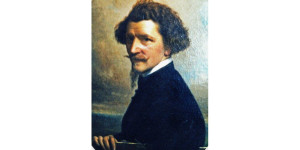
1815–1894: Léopold Loustau (FR)
Born on May 26th, 1815 Loustau was a French deaf artist who produced portraits, history and genre scenes.
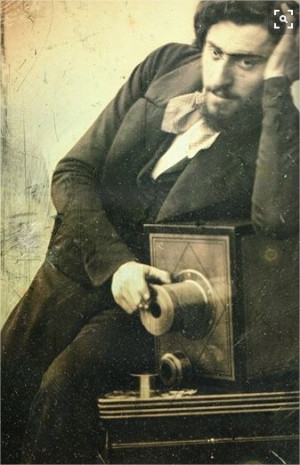
1823 - 1875: Bruno Braquehais, Photographer (FR)
Bruno Braquehais was born in Dieppe, France in 1823. Although records don’t state how he lost his hearing, Braquehais was deaf from a young age. When he was nine years old, he started at the Royal Institute of the Deaf and Mute in Paris. He later found work as a lithographer.
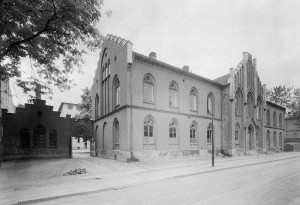
1825: First school for the Deaf in Norway, Trondheim
In Norway there was a deaf person, Andreas Christian Møller, who established the first school for the deaf back in 1825.
At this school, sign language was the language of instruction.
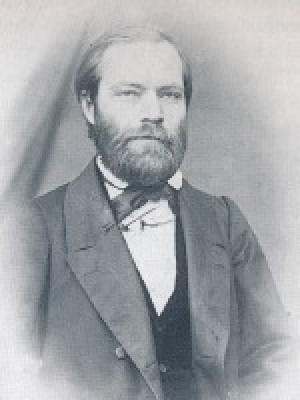
1826 - 1863: Carl Oscar Malm (FI)
Carl Oscar Malm was born in the Iso-Vahe ’rustholli’ estate in the parish of Eura on 12 February 1826.
Malm’s deafness was first noticed when he was expected to start speaking.
In August 1834, the 8-year-old Malm arrived at Manilla, the school for the deaf in Stockholm. The school’s most renowned teacher was Johan Gerhard Holtz, deaf himself. Malm was Holz’s private student until 1840, after which he became an actual student at Manilla. As was the common practice at the school, Malm learned two languages as Holtz’s student: the sign language used at the school and written Swedish.
Even during his school years, Malm dreamt of founding a school for the deaf in Finland. After returning to Finland, Malm started working as a private teacher for two deaf boys in the parsonage of Koivisto in February 1846.
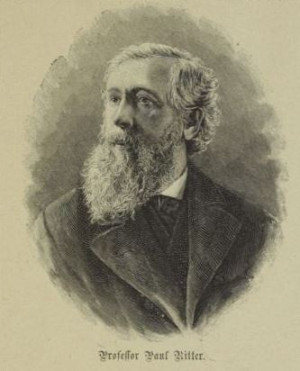
1829 - 1907: Paul Ritter, Painter (DE)
At the age of four, Paul Ritter became deaf due to illness. He became known in particular for his large-format architectural pictures of old Nuremberg with historical figure staffage against the background of the historically faithful architecture of the old town.
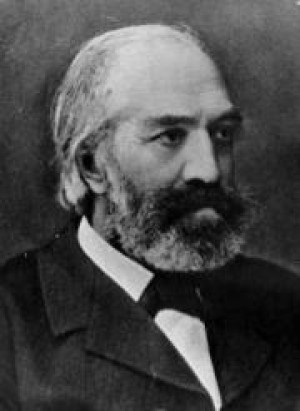
1832 - 1899: Ernst Sokolovski (Estonia)
On May 26 (June 5, according to the new calendar), 1863, Sokolovski met a deaf boy for the first time. Sokolovsky's heart told him: he must also teach the deaf.
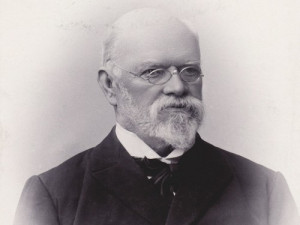
1834 – 1910: Fritz Hirn, Deaf Teacher of the Deaf (FI)
David Fredrik (Fritz) Hirn (1834–1910) is a pioneer of Finland’s Deaf club activities. He was a well-liked teacher in the Turku Deaf School and founded the first kindergarten for Deaf children. Even after retiring, he started collecting the first Finnish sign language dictionary.
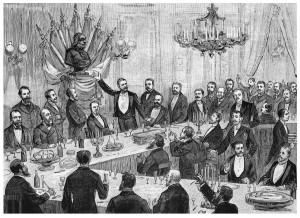
1834: The First Silent Banquet in Paris (Banquet Silencieux, FR)
On November 30, 1834, the first Silent banquet was organized by Ferdinand BERTHIER and Alfred BOCQUIN who are themselves deaf, on the occasion of the 122nd anniversary of the birth of Abbot de l'Epée. This tradition continues to be honored in nearly every country in Europe and in the United States.
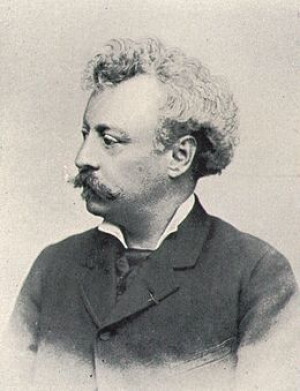
1844 -1914: Félix Martin, Sculptor (FR)
Félix Martin was born deaf on June 2, 18441 in a bourgeois family.
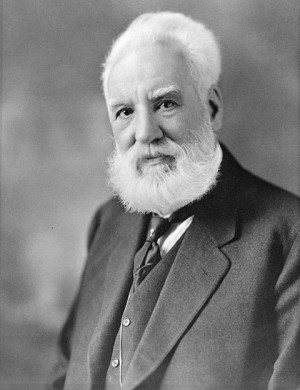
1847 - 1922: Alexander Graham Bell (USA)
Alexander Graham Bell (March 3, 1847 – August 2, 1922) was a Scottish-born American inventor, scientist, and engineer who is credited with inventing and patenting the first practical telephone.
Bell's father, grandfather, and brother had all been associated with work on elocution and speech. Both his mother and wife were deaf, profoundly influencing Bell's life's work.
His research on hearing and speech further led him to experiment with hearing devices which eventually culminated in Bell being awarded the first U.S. patent for the telephone, on March 7, 1876.
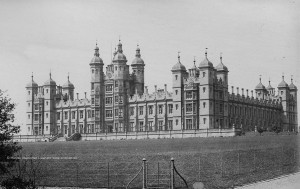
1850: Donaldson's School for the Deaf, Scotland
Donaldson's School was founded in 1851 and was housed in the Donaldson's Hospital Building in West Coates, Edinburgh.
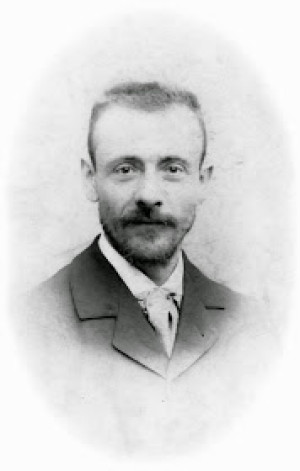
1856 - 1937: Paul-François Choppin, Sculptor (FR)
Paul-François Choppin, born in Auteuil on 26 February 1856 and died in Paris (14th arrondissement) on 13 June 1937, was a French sculptor.
He lost his hearing at the age of two and remained deaf and mute throughout his life.